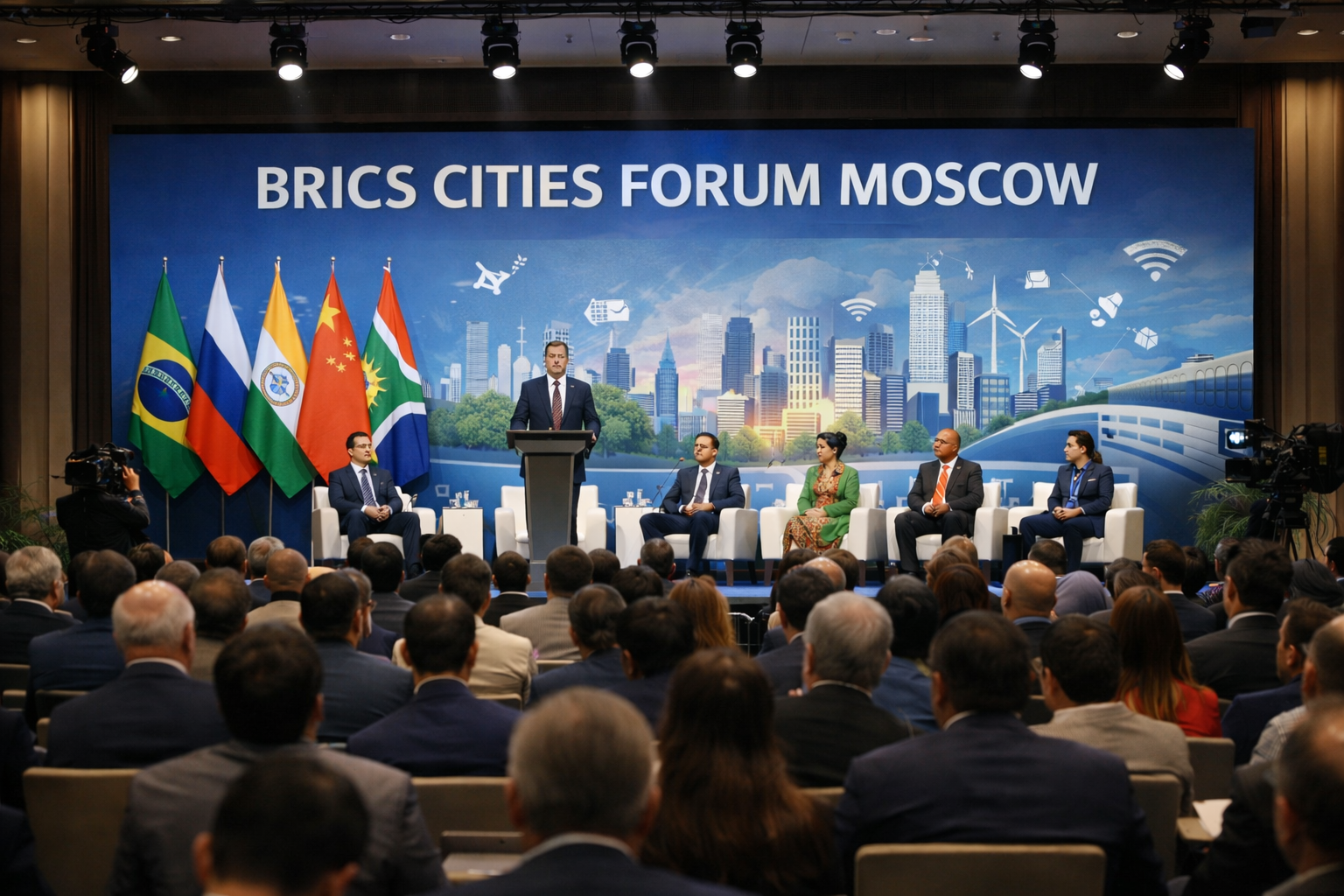
The BRICS Cities Forum in Moscow has emerged as an important international platform for discussing the future of urban development in a rapidly changing world. As cities within the BRICS countries continue to grow in size, population, and economic significance, the need for coordinated strategies and shared solutions becomes increasingly urgent. The forum brings together city leaders, urban planners, economists, and experts to exchange experiences and shape a common vision for sustainable and inclusive urban growth.
Moscow, as the host city, provides a symbolic and practical backdrop for these discussions. With its combination of historical heritage, large-scale infrastructure, and digital transformation initiatives, the city reflects many of the challenges and opportunities faced by major urban centers across the BRICS countries.
Cities as Engines of Economic Growth
One of the central topics of the BRICS Cities Forum in Moscow is the role of cities as key drivers of national and regional economies. Urban areas generate the majority of GDP, attract investment, and serve as hubs for innovation and human capital. At the same time, rapid economic growth creates pressure on transport systems, housing markets, and public services.
Participants at the forum emphasize that economic development must be balanced with social responsibility. Cities are encouraged to invest not only in business districts and large projects, but also in education, healthcare, and accessible public spaces. This approach helps ensure that economic success translates into a higher quality of life for residents, rather than deepening inequality.
Urban Innovation and Sustainable Development
Another major focus of the forum is innovation in urban governance and sustainability. BRICS cities are increasingly adopting digital tools to improve city management, from smart transport systems to online public services. However, speakers stress that technology should serve people, not replace human-centered planning.
Environmental sustainability is also high on the agenda. Issues such as air quality, waste management, energy efficiency, and climate adaptation are discussed as shared challenges that require joint solutions. Many cities present pilot projects and successful practices that can be adapted and scaled across different countries.
Key areas of cooperation highlighted during the forum include:
- development of smart and accessible urban infrastructure
- implementation of digital solutions in city governance
- promotion of environmentally sustainable urban projects
- exchange of best practices in housing and transport planning
International Cooperation Between Cities
The BRICS Cities Forum in Moscow underlines the growing importance of direct cooperation between cities, beyond traditional state-level diplomacy. City-to-city partnerships allow for faster exchange of knowledge, investment, and expertise. Such cooperation helps cities respond more effectively to global challenges, including migration, economic volatility, and climate risks.
By strengthening networks between municipalities, universities, businesses, and research centers, BRICS cities are building a foundation for long-term collaboration. The forum demonstrates that cities are becoming influential international actors in their own right, capable of shaping global urban trends.
Overall, the BRICS Cities Forum in Moscow shows that the future of urban development depends on dialogue, innovation, and partnership. By sharing experiences and working together, BRICS cities aim to create more resilient, inclusive, and sustainable urban environments for the decades ahead.